The Mulch Matrix
Hay. Wood chips. Leaves. A waste product for some, a boon to a gardener. Waste is anthropocentric; in nature all is reused for the benefit of the ecosystem at large. When we garden we should think of our plot as an ecosystem as well. Following this premise we can enliven the soils and enrich the food that’s grown there.
I have used a wide variety of mulches over the years and have figured out a few tips that may help you out along the road to soil symbiosis. Here in Central Frontenac I’m fortunate to have access to hay, both from our farm and from neighbours. When cutting hay myself I’m able to do it before seed set. This is crucial to not introduce lots of grass seed to the garden. When using seedy hay I often opt for using it either extremely thick, 10 inches deep, or so, or I use it strictly on pathways. In spring the hay can be raked into the paths for directly seeded crops (think carrots and beets) or left in place and planted through when transplanting (think squash and tomatoes). One thing to keep in mind when leaving any mulch in place is that it keeps the soil cool, especially in spring. This has caused slow growth for me with squash. When planting through mulch it’s sometimes wise to either remove it for a sunny week before planting or cover the beds with black or clear plastic to raise the temps beforehand. This same attribute however can be of benefit in summer when used for crops like cabbage and lettuce which enjoy the cooler environment.
Secondly, I like using leaves. These seem to create the fluffiest soil texture in the years that follow, they have hardly any weed seeds, and underneath the soil critters and fungi explode. Leaves can be hard to keep in place, and the same soil temperature issues occur in spring, but they are available at just the right time to cover things up for winter.
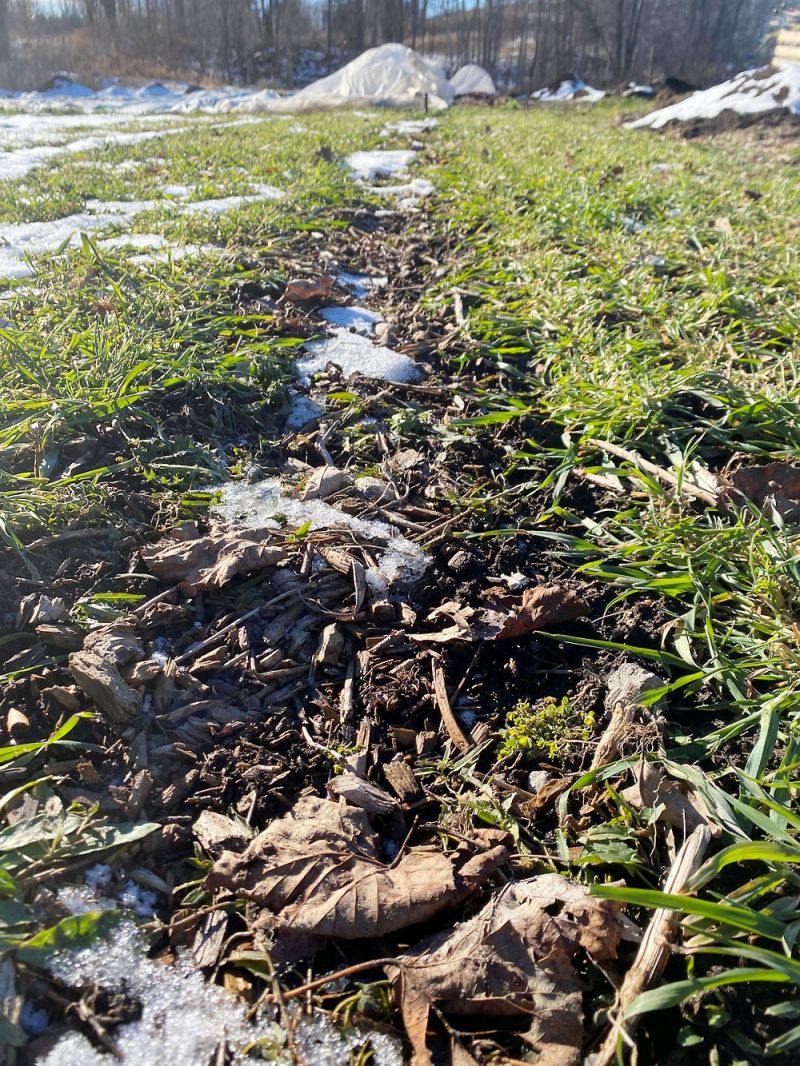
Wood chips are another mulch that I have used in the past. They are great when used for perennials and trees. They stifle weeds and feed the soil slowly over a long period. In the vegetable garden they can be a little trickier to use though. Because of the high carbon content if chips are turned under they “tie up” nitrogen in the breakdown process. This leads to nitrogen deficiency in plants- evident as yellowing leaves and stunted growth. The best use I have found in the veggie garden is on the pathways. Some chips last for years and can really cut back on the weeding needed between beds.
Lastly are the synthetics; landscape fabric and cardboard. These can be very useful in super weedy spots and the warm environment created by the black plastic can accelerate growth in warm season crops, like eggplant. Unfortunately beyond the soil protection from sun and erosion, which keeps the soil critters happy, they offer no nutritive properties to the soil. Although I use various plastic products throughout the garden I am aware that there is potential for microplastic pollution. To ensure some degree of protection I use only agricultural plastics which are UV treated to prevent breakdown in the sun. When it comes to cardboard I have erred on the side of caution and not used them (although allowed in organic agriculture) for fear the paper processing chemicals, glues and inks might make their way into the veg.
The soil science involved with mulching is a complex matrix; more complex than a short article can contain. From ph balance to fungi and bacteria relationships. For those that wish to dig deeper and take the “red pill” I recommend reading - The Living Soil Handbook by Jessie Frost, and Teaming with Microbes by Jeff Lowenfels and Wayne Lewis