
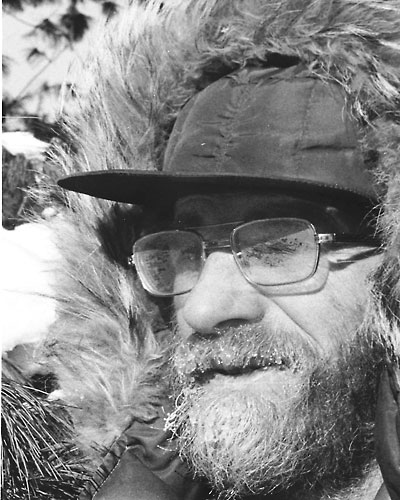

Gray Merriam, ecologist, teacher, photographer, and canoeist, died on 17 October 2026 in Kingston, Ontario.
Gray was born on 8 July 1932 in Smithville, Ontario on the Niagara Peninsula. His family moved to Ballinafad, where he spent time rambling in the outdoors, often with bow and arrow or fishing rod. At Esquesing School Section 14, a wooden box “circulating library” introduced him to books about wildlife, including Ernest Thompson Seton’s descriptions of animal lives. At Georgetown District High School, he found himself drawn to work in the natural world.
While studying wildlife biology at the Ontario Agricultural College in Guelph, he met Aileen Easton, whom he encouraged to write the Ontario Grade 13 exams. She earned a scholarship to Cornell University, graduating from the Bachelor of Science program, while Gray completed the requirements for his PhD. For his research thesis, Gray built radio transmitters, implanted them in groundhogs (Marmota monax), then used VHF telemetry to study their underground behaviour. He shared this early approach to radio tracking at the August 1958 meeting of the American Institute of Biological Sciences.
From 1960 to 1968, Gray taught and carried out research at University of Texas (Austin). In 1968 he accepted a position at Carleton University in Ottawa, establishing one of Canada’s earliest ecology programs. While developing courses, teaching, and guiding graduate research, Gray replaced hunting with photography, and he and Aileen explored watersheds such as the Albany, Thelon and Nahanni by canoe.
By the early 1980s Gray and his students were researching at the cutting edge of landscape ecology. He helped found the International Association for Landscape Ecology, while continuing to advocate for environmental science and the protection of natural systems.
After retirement in 1997 Gray contributed time and expertise to organizations working on environmental stewardship and conservation, especially in the landscape where the Laurentian Shield meets the Great Lakes and St. Lawrence lowlands. Projects included starting the Friends of the Salmon River, writing books, a blog, and columns in The Frontenac News; delivering numerous seminars; as well as photographing natural features in many ecologically special places around the world.
Gray knew that many people perceive great beauty in nature, and he encouraged others to experience and share an appreciation of the aesthetics of our natural surroundings. As his age advanced and his health declined, Gray often expressed profound gratitude for the friendships, opportunities and experiences which he had been fortunate to enjoy.
Gray is survived by his beloved life partner Aileen, his sons Paul and Mike, daughter-in-law Kim Woolley, grandchildren Rylee, Maija, and Stephen, and by the hundreds of students and colleagues who continue the work he loved. A celebration of his life will take place on or about Earth Day, 2027 (details to follow). In lieu of flowers, the family welcomes a donation to charities which support environmental conservation or education.


