CUPW Local President Says Strike Is About Postal Service, And Jobs
Tim Ashworth has been busy, ever since a national postal strike was called last Thursday . The long serving President of Canadian Union of Postal Workers (CUPW) Local 556 represents workers in the urban Kingston bargaining unit as well as the rural Frontenac bargaining unit. He has had a hand in organising pickets in Kingston in recent days, as well as a picket of the Purolator office on Grant Timmins Drive in Kingston, on Monday.
There are currently 8 picket lines up at post offices in Kingston and Frontenac County, including the post offices in Inverary, Verona, Sharbot Lake and Cloyne.
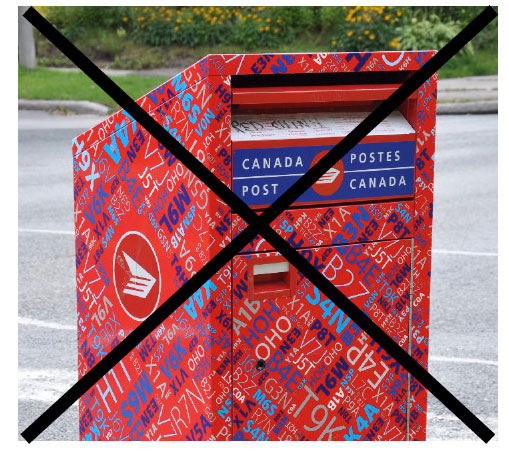
The strike was called in the wake of an announcement by the Federal Minister of Government Transformation Public Works and Procurement, Joel Lightbound, that he was instructing Canada Post to phase out door to door mail delivery in favour of group mail boxes, and to end the moratorium on rural post office closures that has been in place for 30 years.
Ashworth said that even though the strike started after the minister’s directive was announced, the union is negotiating with Canada Post, not the government. He added that it is hard to say at this time where the current job action is headed.
“Canada Post was supposed to submit a new offer to us last Friday. They decided to reconsider their offer, and are now saying they will submit an offer later this week. It will probably come out on Friday, to force our national team to work over the weekend in order to respond next week. That has been a pattern with them,” he said.
He said the situation may become more clear when the new offer is tabled.
He cautioned that rural Canada Post customers, including Frontenac County residents, should be aware that if Canada Post eliminates home delivery and closes post offices, they are the ones who will have to travel further and often out of their normal travel patterns to get their mail from communal boxes, and to post offices to pick up or send out parcels.
“This is a green light to let Canada Post do whatever it wants, without public consultation,” he said. “The idea that the post office will be more viable by making it less effective and efficient, and less reliable for rural customers, does not make sense.”
He also challenged some of the numbers that have been used by Canada Post, and reiterated by the federal government.
He said that labour costs at Canada Post in 2018 were $4.9 billion per year, and they were the same in 2024, $4.9 billion. But operating costs other than labour, including equipment, fuel, and facility costs, increased from $1.7 billion in 2018 to $2.5 billion in 2024, $800 million dollars.
“Labour costs are not the reason for the losses, other costs are,” he said. “And when they say that the post office is losing money because of labour costs, that is misleading.”
The union also questions the recent claim that Canada Post is losing $10million per day.
“They have not provided anything to substantiate that claim,” Ashworth said. “I think they would get further by actually negotiating with us.”
Early this summer, the federal government forced a vote by union members on a contract offer by Canada Post, bypassing the union leadership.
“That will not happen again,” Ashworth said, “it can only happen once during a contract negotiation.”