South Frontenac Election
Three of the four districts in South Frontenac (Bedford, Loughborough and Portland) saw the incumbents sign up for the election, and no one else. Steve Pegrum and Adam Turcotte will represent Bedford District on the new council, Ray Leonard and Doug Morey will represent Portland District, and Randy Ruttan and Scott Trueman will represent Loughborough District.
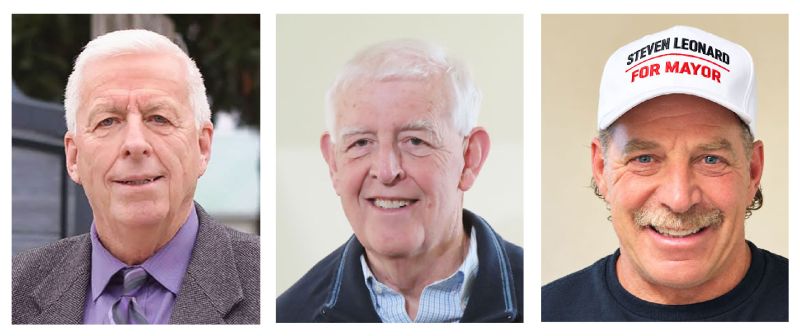
In Storrington, the incumbents Ron Sleeth and Norm Roberts are all running again, along with challenger Doug Boulton. Ron Vandewal is running for a fourth term as Mayor, challenged by former two-term Councillor Alan Revill, and Steven Leonard. The six candidates are profiled in this issue, starting on page 6. An all-candidates meeting was held on September 17 on September 17 at the Storrington Hall, with all six candidates in attendance. A second meeting took place this week, (October 7), for the mayoralty candidates.
Link to Candidates for Storrington District Councillor
Candidates for Mayor
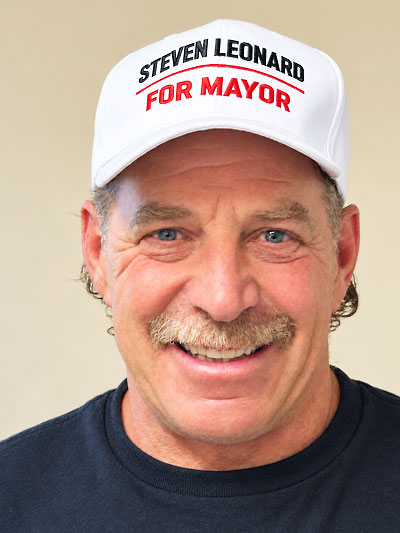
Steven Leonard
Steven Leonard is from a family with long roots in municipal politics, including both his great uncle Keith and his uncle Phil, but until the last few years, he had not thought about running for municipal office himself.
That all changed, first when the Hartington subdivision, which abuts his property, was approved when there were concerns over water supply, and flooding, that were raised by him and others, but then more acutely, a couple of years ago when the township went through the process of updating its Official Plan.
The process included increasing the amount and type of land that is now designated as Prime Agricultural Land in the township, a designation that restricts development on those lands.
“Historically, agricultural officials and people from the Ministry actually came into this area. They dug test pits, took soil samples and looked at what was physically in the ground. That work resulted in the Prime Agricultural Land designation being removed from Portland and, to the best of my knowledge, Storrington as well.”
“Removing the designation did not mean agriculture disappeared or that unlimited development was allowed. Properties were still limited to three severances, and at the time, those were approximately one-acre lots, subject to the applicable requirements such as sufficient road frontage. Agriculture wasn’t eliminated. It is all documented in the book “Portland My Home.”
His concerns about the Official Plan extend to matters beyond his own farm, and he has also been looking at the township more broadly and has become convinced there is a real need for a more common-sense approach to spending, that respects the situation that many residents are facing, and feels that someone with his background and approach will make a difference.
Leonard began working as a farm labourer when he was a young teenager, on his family farm He then headed out West to work in the oilfields.
“Back in the 80s in the oil fields, there was no such thing as calling in sick” he said. “We knew how to work.”
He returned home in the early 1990s. He completed masonry training at Sir Sandford Fleming College in 1993, and became a qualified Brick and Stone Mason, earning an Ontario Certificate of Qualification and Red Seal Endorsement.
He took over his family’s farm in 2004. At the time, it consisted of approximately 100 acres and about 80 head of cattle. He later moved into cash cropping and eventually hay production, all the while continuing to work as a mason.
“I’m used to hard work and to finding ways to get things done,” he said.
In 2016, he returned to school at the Academy of Learning, where his studies included Business Correspondence, Business, Math and Office Procedures.
When he looks at what is happening at the township, his primary concern is with costs.
“Every year they take more of our money, and they plan to keep that up, for the next four years, and after that. I say we stop doing that.”
He also thinks the council needs to look much harder at finding new sources of revenue.
“Perhaps a charity casino would be a good idea. Or maybe the township can purchase a gravel pit to use for ourselves and save on gravel costs and sell gravel to bring in money. We have to put something in to bring in money, because the taxpayer can’t keep up, and we are not seeing a lot of population growth, any more. We haven’t really grown since 2018.”
He also thinks the township does not use its resources wisely.
“An example is all the brush and trees we clear off the sides of roads in the summer. We pay to get rid of it all. Why not put in an outdoor furnace at Keeley Road, and heat the office with it, instead of buying more and more fuel. It is simple things like this that the township avoids doing.”
The township raises extra revenue each year as the result of new construction.
“If growth means new homes and additional assessments are being added to the tax base, that also means additional tax revenue is coming into the municipality. Taxpayers have every right to ask how much of that new revenue can help reduce the pressure on the people who are already paying taxes.
“I recognise that growth can also bring additional municipal costs. That’s why we need to look at both sides of the equation: What new revenue did the growth generate, and what additional costs did the municipality actually incur?
“New subdivisions are an example of why I think those numbers should be examined carefully. Developers can be responsible for constructing roads and other infrastructure to municipal standards, before those assets are ultimately assumed by the municipality, while the completed homes add new assessment to the tax base.
He would like to work closely with Council to bring the changes that need to take place, in order to keep taxes from increasing year over year.
“Council should examine expenditures, maintenance practices, priorities, operational efficiencies and potential new revenue before automatically turning to taxpayers for additional money,” he said.
He added that he would listen to any idea that will help. As far as strong mayor powers are concerned, he said his normal approach would be to work with Council and the public and build agreement.
“I would only consider using extraordinary mayoral authority in an exceptional circumstance where I believed the facts justified it, and I would explain publicly why I was doing so.”
He said that he will not make any promises, that’s not my way, but I never lie. I tell people where I stand, I look at the facts in front of me, and then I make the best decision I can, for the municipality and the taxpayers.”
Alan Revill
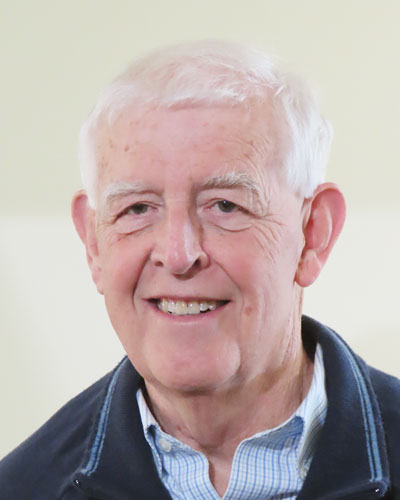
Alan Revill ran for mayor in 2022. He finished second in that election with 1843 votes, over 1200 behind Ron Vandewal, who won his third mandate as mayor with over 3,000 votes, 48% of the votes that were cast. Before that election, Revill had served two terms as one of the councillors from Bedford district after being acclaimed to the position in both 2014 and 2018.
In that election, Mark Schjerning, a former member of council and second time mayoralty candidate finished in third place, not that far behind Revill with over 1,500 votes. The result has not dissuaded Revill from running again in 2026, this time with a third candidate with no political experience, Steve Leonard. He is running again with similar concerns as last time.
Revill has a long and varied background in the municipal world, both in the political side and the staffing side, which, he said, gives him a pretty good insight into how decision making can be most effective. He was the chief building official in South Frontenac, until he retired in 2012. He worked until a couple of years ago for Central, North Frontenac and Stone Mills Townships, always on a contract basis, helping them out as they faced staffing challenges in their building departments, before finally retiring as a building official.
He is the past chair of Cataraqui Conservation and Conservation Ontario, now serving on the Board of the Federation of Ontario Cottagers Associations. “Public service is still something that is very important to me and that includes the role of helping people get support from local government and ensuring that the members of council have an opportunity to express their ideas and perspective on issues before Council,” he said.
He feels that the lack of candidates for council this time around, where there is only one challenger to incumbents throughout all four districts, is a signal of the lack of impact members of council have been able to have at council.
He has been knocking on doors for several months and has learned that residents have a lot of concerns over how to navigate the municipal system. “I still get calls from people that don’t understand the process, and I always try to help them work through it.”
He has concerns about at least one of the changes that has been made to the administrative structure; the fact that the building and the planning departments are now under the supervision of the same person, the director of development services. While very competent people have filled the position, they bring expertise in either planning or building matters but not both, to the detriment of the combined department.
In terms of asset management, which will be a major factor going forward, he said, “I think we need to take some innovative approaches to asset management. Selling or demolishing under-used assets, as well as reviewing service levels, needs to be considered. Active pursuit of Federal, Provincial as well as Federation of Canadian Municipalities grants, would provide extra funds to decrease the pressure on local tax payers.”
I also believe that the leader in council (your mayor) needs to have a clear understanding of the issues and to be able to make an independent assessment of staff and consultant reports that come to council. I have a willingness and interest to do my own research, to support my understanding of a particular issue.
He is also concerned about the gravel roads in the township, those maintained by the township itself, as well as the private lanes, which mostly access seasonal waterfront properties, receive the attention they require. “After my advocacy, gravel roads are now included in asset management, which was overdue in my opinion and they need to remain an important part in the planning from the Public Works department.”
“The Private Lane Assistance program that helps improve lane access for emergency responders, has worked well for many years and I would support slowly increasing the available grant money because of the role that waterfront seasonal and permanent residents play in our township. They provide a significant tax base but also contribute in many other ways.”
He is an opponent of strong mayor powers granted by the province, saying, “I will be a strong mayor by collaborating with council members, but not by using strong mayor powers.” These powers consider the budget to be the mayor’s budget, but he intends to consult widely with staff, council and the community, in its preparation.
“I intend to work closely with council members on a full range of issues, encourage their participation, respect their opinions and support democratic decision making.”
Ron Vandewal
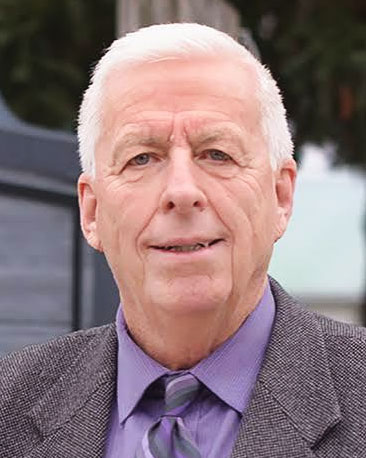
With twelve years as mayor under his belt, Ron Vandewal is more than used to the pace, and the time and energy, that is required to do the job fully.
In his case, that means attending events in every corner of the township, whenever his presence is formally requested, and whenever the event is sponsored either by the township itself, or any well-defined group within the township.
“It is important for me to represent the township in a positive way,” he said.
He is the longest serving mayor in the 28 years history of the township, the only one to seek three terms.
One of his stated reasons for running again is to see through the Verona Housing project, which was initiated late in his first term on council, in 2019.
“It has taken a lot longer than any of us expected, but we have learned a lot, and we have been able to secure quite a bit of grant money, including the money we need to commit, in order to secure a loan to cover the full cost. The project is designed to pay for itself over time, and at this point it appears, while there is a lot of staff time in it, it will not require any taxpayer money up front.”
South Frontenac has a six-acre parcel in Sydenham, with access to the Sydenham water system, and there has been talk of a township sponsored housing project there.
“People have asked out that, and we probably would have gotten it done quicker than the one in Verona, but I have always said, we are not even going to look at anything else in housing until we have construction well underway, in Verona,” he said.
As recently as the last election campaign in 2022, he has said that the budget target that he supported was for a 2% increase in the tax rate.
“I think that the 2% goal has come back to bite me a little bit,” he said this week, “I never promised we would accomplish it, let me be clear on that, but it was our target. For the past couple of years, we have been closer to 4% or more, and there is every chance the increase will be in that range for the next year or two.”
That being said, Vandewal said, he is not going to give up on his goal to keep the tax rate as low as possible. He is taking the cost of asset management, which the consultant who delivered a report on asset management pegged at requiring major tax increase each year of the upcoming mandate, with a grain of salt.
“What I say to that is that we accepted that report for information. Now the municipality has all the information we need. We will decide what to do with that information, but asset management is only one element in the long-term financial plan our staff is in the midst of preparing.”
He has been campaigning as hard this time as in previous campaigns, and has visited 1700 homes so far.
“For the most part, at least from what people are telling me at the door, they are pretty happy with the job we’ve done over the past four years.”
When he decided to run this time, he originally thought he would not campaign as heavily as he did in the last three elections, because he thinks people know how he has done in this job already, but as the campaign got underway he said “I thought that if I don’t get out and knock on doors, and then I lose, I will end up regretting that I did not give it everything. This way, win or lose, I will not have any regrets.”
He has found that from what people have been telling him at their door as he campaigns, is that the biggest issue in South Frontenac is still the state of the road network, and concerns over tax increases.
One of the biggest road projects the township is facing, is the northern section of Road 38.
“We don’t have any plans for Road 38. We are planning rebuilds for Rutledge Road and Sunbury Road, but 38 is not there.”
He said that he met last year with the Ontario Ministry of Transportation, and when he brought up South Frontenac’s request for the province to upload that road and make it a provincial highway, which it was, until it was downloaded, 27 years ago.
“He had our file from the last time we asked them, so that is some progress, because they acknowledge our request at least. It is a long shot, for sure, but it’s like lottery tickets, you can’t win if you don’t play.
There is a list of accomplishments over the current term of council, coming to the meeting of council this week, “and when you see it all put together, it is a long and impressive list,” he said.
He said that he is proud of everything council has accomplished this term.
“I think we’ve done a lot, and we are ready to do more, and I am ready as well, if people decide they want me to continue,” he said.