Dutch Mill Spices Looks To Grow In 2026
Sjoukje ('Shou-Kia') van der Lann moved to Bell Rock with her partner Benjamin Oakley, from Toronto, just before the pandemic.
They both work in the arts. She is a conservator working with the AGO, and he runs Castle Museum Services, a company that specialises in building crates to transport works of art among other things.
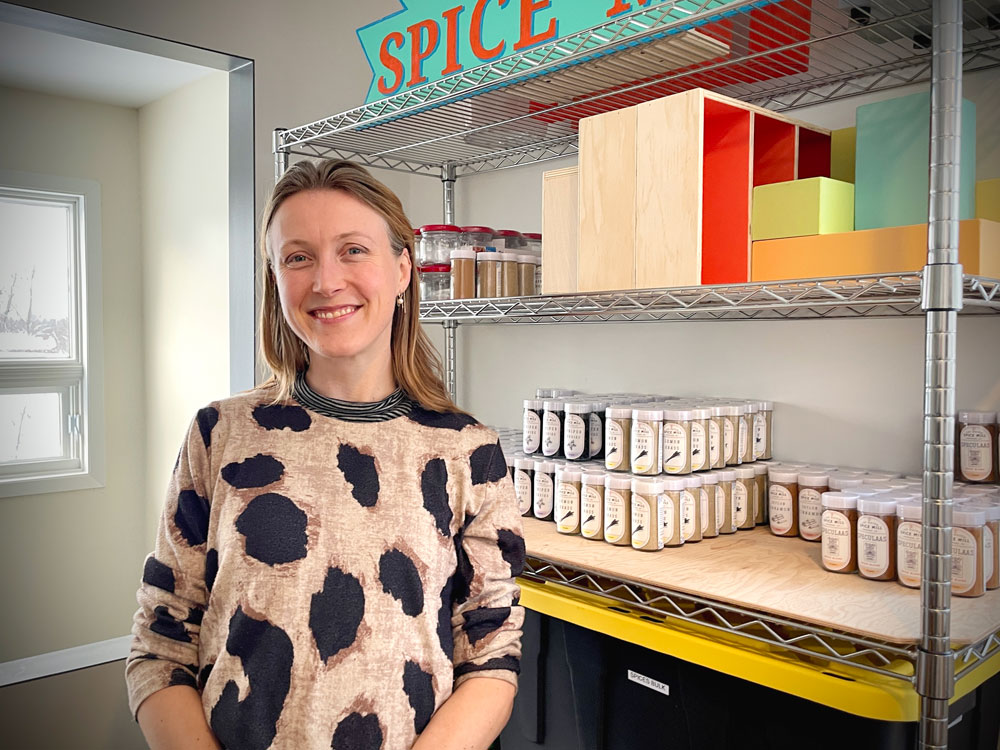
They wanted to live a rural lifestyle while navigating careers that take them to Toronto periodically. Then a couple of things changed. The pandemic hit and Sjoukje found out that she was pregnant with the couple's first child, Finn.
(The couple now have a second child, Fenna, who is almost 3.)
The pandemic resulted in more rural isolation than they had been planning for, of course, and in those early months of the pandemic Sjoukje did a lot of baking, and as she was doing that she was drawn to the tastes and smells of the spices that she grew up with, in the Netherlands.
Having to seek out the spices she loves so much, prompted Sjoukje into developing her own spice sources and mixing her own variations, and that all led to the idea for a small, home-based company, Dutch Spice Mill.
Working out of the commercial kitchen at the Bell Rock Community Hall, Sjoukje prepares and bottles an increasingly diverse line of spices for sale at stores locally, including the Limestone Creamery and Food Less Traveled.
“I source my ingredients carefully, and am working towards using local sources where I can,” said Sjoukje.
One of the first Dutch Mill products was Speculaas, a spice mix which is similar but distinct from pumpkin pie spices that are common in Canada, and is commonly used in north-west Europe, especially in the Christmas season. The Dutch Spice Mill version of Speculaas includes cinnamon, nutmeg, clove, aniseed, white pepper, ginger, coriander, and cardamon.
Dutch Spice Mill's ground cinnamon uses Ceylon or “True” Cinnamon, which is distinct from the Cassia cinnamon used in commercial cinnamon, that is commonly available.
Ceylon cinnamon is lighter in colour and more delicately flavoured than Cassia, and has associated health benefits as well
Other spices include: Anise seed, Juniper, Whole Nutmeg, and Lemongrass. Canadian sourced Mustard Seed is a new product that will be coming out in 2026.
These spices are woven into the Dutch palate, and into Dutch history as well. Throughout the 18th Century, the Dutch East India Company operated like a quasi-colonial power, bringing spices from Indonesia and Sri Lanka (then known in Europe as Ceylon) to Europe, and eventually North America as well.
The Dutch East India Company was the world's first multinational corporation, and not only did the company export spices, it acted as a colonial power unto itself, with all the control and brutality that came with that. All of that history is not lost on Sjoukje, and forms part of the educational element she would like to weave into her company as she moves forward.
Another next phase for Dutch Spice Mill is developing a website and a web store, along with bringing production and packaging to a level where Sjoukje can approach larger retailers. Continuing to source organic and local producers for her to work with in developing spices, is another priority. “We share these spices globally,” she said, “and they tell a story. “That is an important part of what Dutch Spice Mill is for me.”
For more information about Dutch Spice Mill, go to the Facebook and Instagram pages, look for the website later this year
Sjoukje ('Shou-Kia') van der Lann moved to Bell Rock with her partner Benjamin Oakley, from Toronto, just before the pandemic.
They both work in the arts. She is a conservator working with the AGO, and he runs Castle Museum Services, a company that specialises in building crates to transport works of art among other things.
They wanted to live a rural lifestyle while navigating careers that take them to Toronto periodically. Then a couple of things changed. The pandemic hit and Sjoukje found out that she was pregnant with the couple's first child, Finn.
(The couple now have a second child, Fenna, who is almost 3.)
The pandemic resulted in more rural isolation than they had been planning for, of course, and in those early months of the pandemic Sjoukje did a lot of baking, and as she was doing that she was drawn to the tastes and smells of the spices that she grew up with, in the Netherlands.
Having to seek out the spices she loves so much, prompted Sjoukje into developing her own spice sources and mixing her own variations, and that all led to the idea for a small, home-based company, Dutch Spice Mill.
Working out of the commercial kitchen at the Bell Rock Community Hall, Sjoukje prepares and bottles an increasingly diverse line of spices for sale at stores locally, including the Limestone Creamery and Food Less Traveled.
“I source my ingredients carefully, and am working towards using local sources where I can,” said Sjoukje.
One of the first Dutch Mill products was Speculaas, a spice mix which is similar but distinct from pumpkin pie spices that are common in Canada, and is commonly used in north-west Europe, especially in the Christmas season. The Dutch Spice Mill version of Speculaas includes cinnamon, nutmeg, clove, aniseed, white pepper, ginger, coriander, and cardamon.
Dutch Spice Mill's ground cinnamon uses Ceylon or “True” Cinnamon, which is distinct from the Cassia cinnamon used in commercial cinnamon, that is commonly available.
Ceylon cinnamon is lighter in colour and more delicately flavoured than Cassia, and has associated health benefits as well
Other spices include: Anise seed, Juniper, Whole Nutmeg, and Lemongrass. Canadian sourced Mustard Seed is a new product that will be coming out in 2026.
These spices are woven into the Dutch palate, and into Dutch history as well. Throughout the 18th Century, the Dutch East India Company operated like a quasi-colonial power, bringing spices from Indonesia and Sri Lanka (then known in Europe as Ceylon) to Europe, and eventually North America as well.
The Dutch East India Company was the world's first multinational corporation, and not only did the company export spices, it acted as a colonial power unto itself, with all the control and brutality that came with that. All of that history is not lost on Sjoukje, and forms part of the educational element she would like to weave into her company as she moves forward.
Another next phase for Dutch Spice Mill is developing a website and a web store, along with bringing production and packaging to a level where Sjoukje can approach larger retailers. Continuing to source organic and local producers for her to work with in developing spices, is another priority. “We share these spices globally,” she said, “and they tell a story. “That is an important part of what Dutch Spice Mill is for me.”
For more information about Dutch Spice Mill, go to the Facebook and Instagram pages, look for the website later this year