City Coming Calling For Hospital Support
Quietly, the Kingston Health Sciences Centre (KHSC) has been working on a development plan ever since the full amalgamation of Kingston General Hospital and Hotel Dieu Hospital was completed almost 10 years ago.
A location for a brand new hospital complex was identified in 2021, and the City of Kingston purchased 95 acres for the project on Creeksford Drive, which runs west off Gardiners Road (Centennial Drive runs to the East), parallel to and just south of Highway 401.
Infrastructure Ontario was approached in 2023 in a first step towards financing the project, which will require funding from public sources.
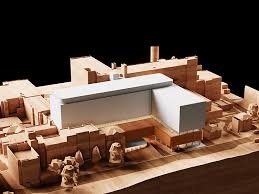
The project is now at the point of seeking support from regional municipalities within the large catchment area of the Health Sciences Centre, which is the tertiary care centre for Southeastern Ontario, serving a population of 650,000 and incorporating the southeast regional cancer program, which is based at the KGH site.
South Frontenac Township was approached earlier this winter to support the project.
At the Frontenac County Council table last week, the same request came forward, and was ultimately supported by Council.
“They did not ask for any money when they came to South Frontenac, so we supported it,” said South Frontenac Mayor Ron Vandewal, who was chairing the Frontenac County meeting in his role as Deputy Warden.
The Health Sciences is planning to move its operations to a new facility.
A media release from the City of Kingston last summer indicated that the hospital is not just looking at expanding west, but essentially moving most of its services to a new campus.
“KHSC is committed to working with the City to explore options for maintaining appropriate access to urgent care, mental health, and other essential services in the downtown core, while ensuring that the aging hospital infrastructure can be safely decommissioned as part of the broader redevelopment strategy.”
Frontenac Islands Mayor Judy Greenwood-Speers said that she is concerned that hospital upgrades like this one, “often do not focus on patient care, and the community can end up with less hospital beds than they came in with. I would make sure there is a commitment to new beds if this is built.”
Other members of council were happy with the proposed new location, as it will be easier to access for much of Frontenac County via Road 38, the busiest arterial road in Frontenac County.
The timing of this call for support came from the City of Kingston, as a part of an effort to see the Kingston hospital redevelopment project included in the upcoming provincial budget.
“The province is currently consulting Ontarians about their 2026 budget priorities and this is a time for Frontenac and neighbouring communities to express their continued support for this project, to have it included in their budget,” the motion said.
The motion also asks the province to provide “full funding” for the project.
Frontenac County ratepayers support KHSC with an annual payment of just over $55,000, as part of a ten year commitment that started in 2018. Prior to that, the county supported Kingston General Hospital with a $54,000 annual payment from 2008-2017.
Ambulance Response Time Performance Standards Report
The annual performance standards report from Frontenac Paramedic Services reflects the now standard classification of calls coming in for service. Urgent calls, those classed on a scale of 1-3, have target response times of 6, 8 and 10 minutes, respectively. Because urban and rural calls are mixed together in reporting as Frontenac Paramedic Services serve the City of Kingston and Frontenac County, the target is for 48% of calls to make the 6 minute time for the most urgent calls, sudden cardiac arrest (SCA) calls. That standard was met less often than the target in 2025, only 38% of the time.
The 8 minute response time for the next to highest level of urgency, targeted to be met 70% of the time, was at 65% for the year, and the 10 minute response, which has a target of 75% of calls, was met 67% of the time.
The targets of 60, 120, and 240 minutes for the less urgent classes of calls were met almost all of the time, over 99%.
A service report completed by Frontenac Transportation service in 2024, recommended increasing the capacity of the service by funding a new 12 hour, 7 day a week shift in 2026, 2027, and 2028.
Looking at the results from a more rural perspective, Frontenac County Council members said they are considering what the new, longer response times mean for their own emergency services, which are dispatched along with paramedics, to most calls. Fire services are a high budget item for the municipalities.
“If the paramedics say they don't need to be there in less than 120, why are our fire services being dispatched in 15,” said Ron Vandewal, adding that the medical response times for South Frontenac Fire and Emergency Services are being reviewed.
“The City of Napanee changed theirs, and it has saved them a lot of money” he said.
“Central Frontenac wants to be a part of that, because three quarters of the expenditure is on first response, and in the day time we don't really have the people around to do that, so the ones that are there are doing all the response. So, when this happens, we're in,” said Central Frontenac Mayor Frances Smith.
Remuneration Report
The annual remuneration report for members of council was released.
Gerry Lichty, Warden for 2025, received $37,250 in wages, and $6,000 in expense payments for mileage and conference travel. Deputy Warden Bill Saunders received $22,750 in wages, and $4,000 for expenses, and the wage for the other councillors was $17,250, with a side variation in expenses claimed depending on travel and conference attendance, from a low of $850 for South Frontenac Councillor Ray Leonard, to $5,250 for Frontenac Islands Mayor Judy Greenwood-Speers, and $6,500 for North Frontenac Councillor Fred Fowler.
Governance
Council received a written and verbal report from Clerk Janette Amini regarding a suite of planned amendments to the county procedural bylaw, which has been under review.