Buyer Beware
The recent spate of Federal MPs jumping ship to the Liberal Party has made voters more cynical than ever about politics. Calls for those MPs to resign their seat and run again under the Liberal banner have greeted each defection.
They do not have to do that, of course, because they were elected as individuals. The electors voted for them, by name, not for the party affiliation that appeared on the ballot as well.
It would be cleaner, perhaps, if the party was not listed on the ballot, because the party is not up for election, only the candidate is. It is only once the results of all of the 343 ridings are tallied, that the nature of the government is determined, and as we have seen in recent months, party affiliations are not fixed. That is why, thanks to whatever enticements were offered, a number of Conservative Party affiliated MPs and one NDP affiliated MP, switched to the Liberals, who now have control over Parliament with 173 votes.
So, if party affiliations are fluid, how do the Liberals control those votes?
In fact, they don’t control those votes. If one of their MPs decides to vote against the party line, they may be kicked out of the party for it, but they will remain the MP for their riding, will continue to collect a salary and have a vote in Parliament. If they choose to run again in the next election, they will be able to do so, but will lose that party affiliation on the ballot.
And that might be enough to make them have no chance in that election, because most voters are motivated to vote for the party and not the candidate. In fact, many voters do not even know the name of the candidate when they go to vote, which is why it would be impractical to remove the party affiliation from the ballots.
It is hard enough to get voters to the polls, and if people are then faced with a list of names of people they don’t know, what are the chances of them returning to vote the next time around. They might even leave before voting.
In recent elections, even political parties are losing their meaning in place of the way the leaders are marketed, or should I say branded. The federal government is now known as the Carney Team, and the policies of the party that has formed government for about 45 of the last 60 years are less relevant than his persona, which is connected to high finance and “building big.”
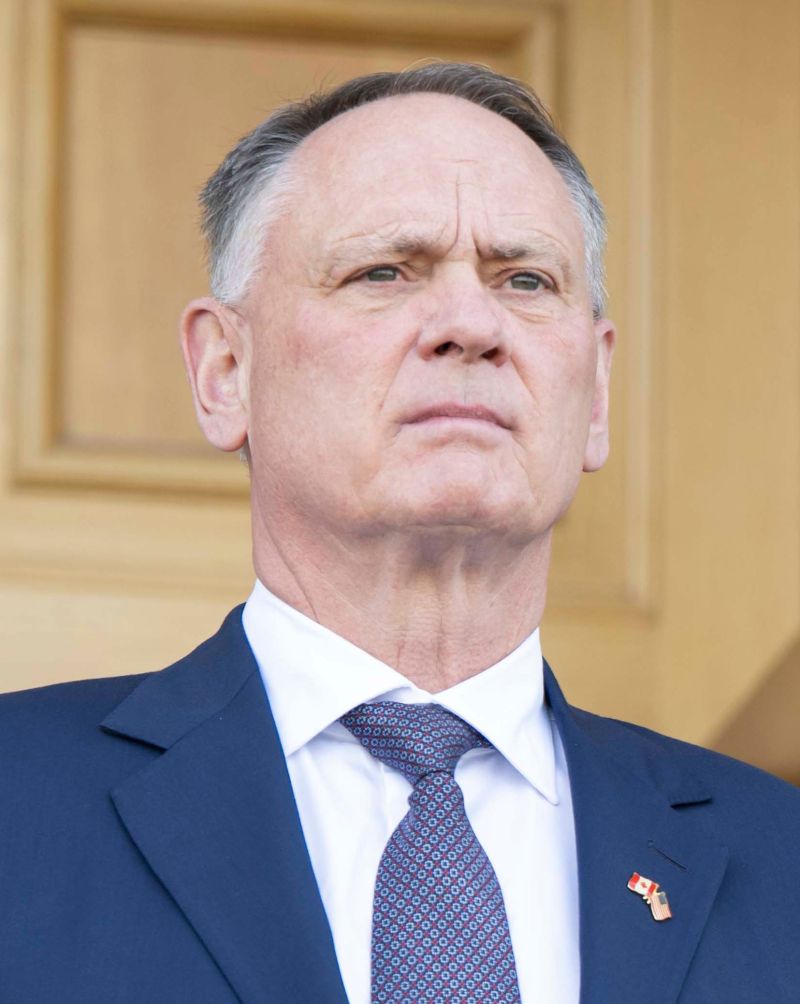
To prove that point, have a look at the man in the photo at the top of the page. It is a picture of David McGuinty, the Minister of Defence. Not only is he the brother of former Ontario Premier Dalton McGuinty, he has also been the MP for Ottawa Centre since 2004. I did not know who the Minister of Defence was, and I did not recognise who he was when I did an image search for Defence Minister, Canada, in Google. Maybe our readers are more aware than I am, but even though defence has become a higher priority since Carney became Prime Minister than before, I did not know David McGuity was the Minister, nor could I put his name to the photo, even though he would be one of the few people I could identify as a Liberal member of Parliament if asked.
While the role of MP or MPP has been diminished by party politics, they are still the person we vote for, and they are the only one who is ultimately accountable to us.
What has happened in recent months in federal circles is mainly a function of the circumstances, but nonetheless it is a reminder that we do vote for a person. Who they are and what they stand for does matter, and perhaps it would be an idea to pay attention when we vote.
According to reporters covering the Federal Liberal Party convention last weekend, there are eight more members of the Conservative Party caucus who are thinking of switching to the Liberals.
It would be a surprise if one of them was our local MP Scott Reid. He got his start in politics as a young member of Preston Manning’s staff. Although he is a Libertarian and not a perfect fit for the Conservative Party, his dislike of the Liberal government that has been in place since 2016 started early, and has only grown from there. Reid is also the Deputy House Leader for the Conservatives, and our riding has never gone Liberal. He would have nothing to gain by jumping on the Liberal bandwagon.
Even so, when we vote in the next federal or provincial election, it might be an idea to look into the candidates themselves, not just the party they represent.