Wolfe Lake AGM: Rural Neighbours Can Make The Difference During Cardiac Emergencies
For members of the Wolfe Lake Association Westport, the annual gathering is always an opportunity to connect, share updates and discuss issues that affect life on the lake. This year, however, the conversation turned to something that could one day save a neighbour’s life.
During last week’s Annual General Meeting (AGM), of the Wolfe Lake Association Westport (WLAW), emergency physician Dr. Steven Brooks and Dr. Vlad Latiu of Queen’s University delivered a powerful message to cottage owners: in rural communities, neighbours can be the critical link between a medical emergency and survival.
The first few minutes are critical
Guest speakers Dr. Steven Brooks and Dr. Vlad Latiu of Queen's University explained that in rural communities, emergency medical services often face longer travel times than in urban areas. Those first few minutes before paramedics arrive are critical, making bystanders an essential part of the chain of survival.
CPR and AED
The presenters encouraged residents to remember four simple steps: recognize the signs of cardiac arrest, call 911 immediately, begin high-quality CPR, and use an Automated External Defibrillator (AED) if one is available. Quick action can dramatically increase a person's chances of survival.
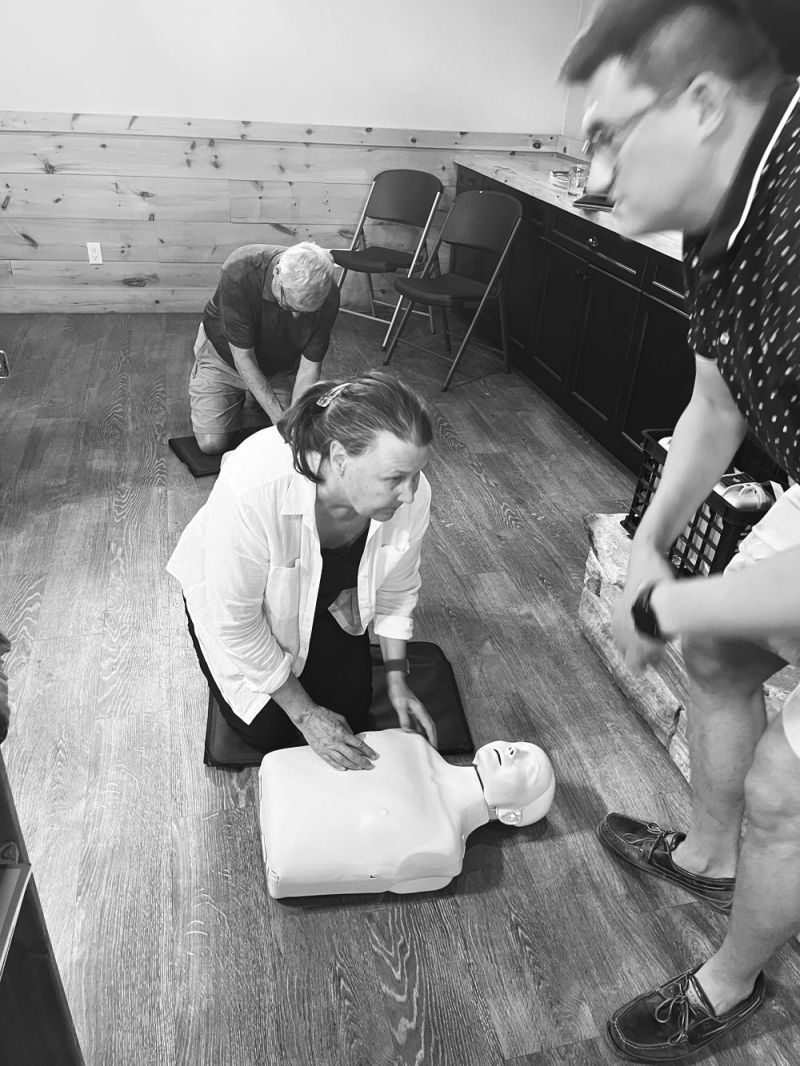
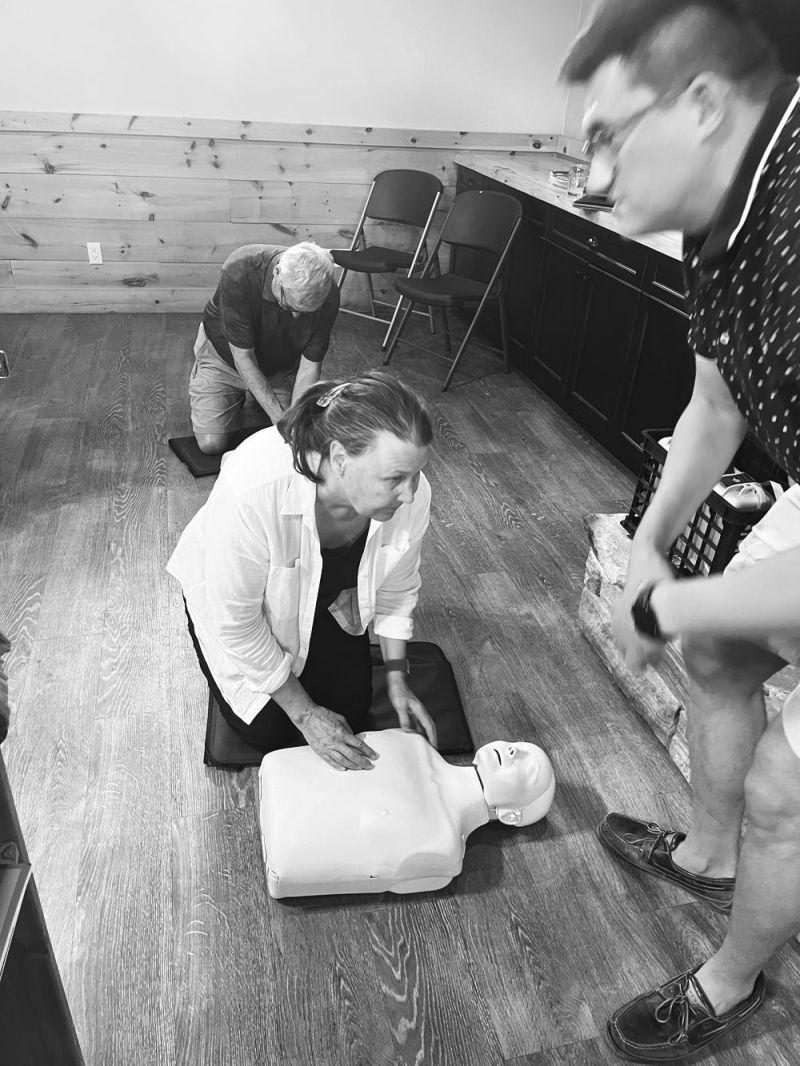
One of the most popular parts of the afternoon was the hands-on CPR demonstration. Participants gathered around training manikins to practise chest compressions and experience the correct rhythm and amount of force required. Many commented afterwards that the practical session left them feeling more confident they could step in during an emergency.
Neighbours-Saving-Neigbours
Brooks and Latiu also introduced the audience to the Neighbours Saving Neighbours initiative, a Queen's University program designed to strengthen emergency response in rural areas by training local residents to act before paramedics arrive. Although the program is currently paused while additional funding is sought, its central message remains unchanged: neighbours are often the first people on the scene and can make a life-saving difference.
Great outcome
The presentation inspired immediate discussion among Wolfe Lake residents and visitors from neighbouring lakes about acquiring shared AEDs for cottage roads and road associations. That is a fantastic outcome and a testament to the impact of the presentation. Having both trained neighbours and accessible defibrillators can greatly improve survival rates in rural settings.
At the conclusion of the talk, Wolfe Lake Association President Bill Garland thanked Dr. Brooks and Dr. Vlad Latiu for sharing their expertise and presented each with a small token of appreciation on behalf of the Association. Queen's University medical student and paramedic Luke DiMambro, who assisted with the CPR training, was also recognized.
The afternoon left attendees with practical skills, greater confidence, and an important reminder: when a cardiac arrest occurs in a rural community, the first person to save a life is often not a medical professional, but a neighbour willing to act while help is on the way.